In the 18th century, the raw-material-rich regions of Europe became economic powerhouses — yet the tinkerers of poor Swabia/Baden-Württemberg succeeded through ingenuity, not resources. This spirit of the Schwäbischer Tüftler — trying, rethinking, innovating — was championed by Ferdinand von Steinbeis (1807–1893), a pioneer of practice-oriented education and technology transfer. His philosophy still guides us today.
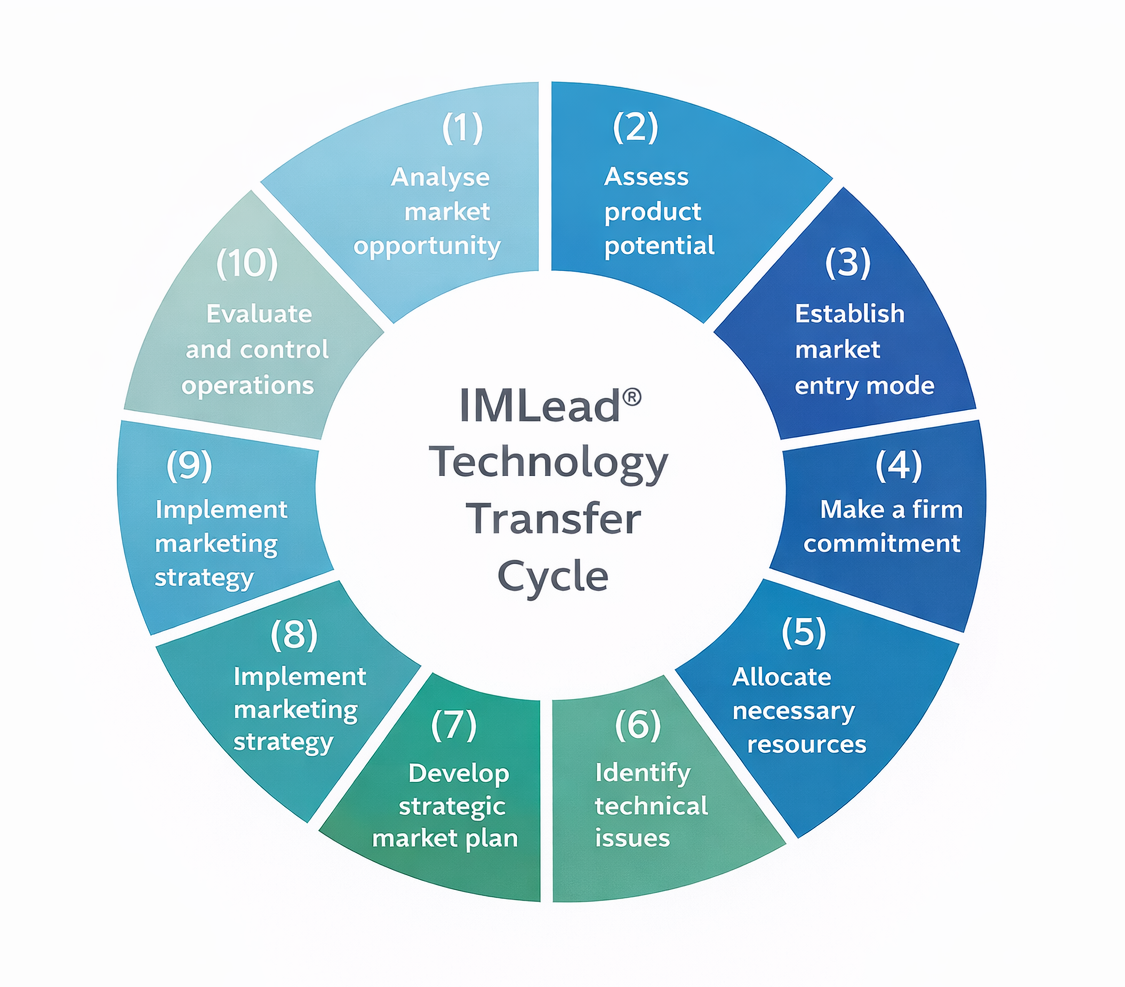
With our IMLead® concept, we accelerate the leapfrogging of outdated technological stages, making the latest green technologies available worldwide. This requires an integrated approach: adapting existing knowledge to new socio-economic realities, respecting intercultural specificities, and anchoring know-how locally through regional partnerships, innovation clusters, and in-country R&D.
Every transfer begins with a proven standard technology that can be transferred as-is, then progressively scaled to more complex products and processes.
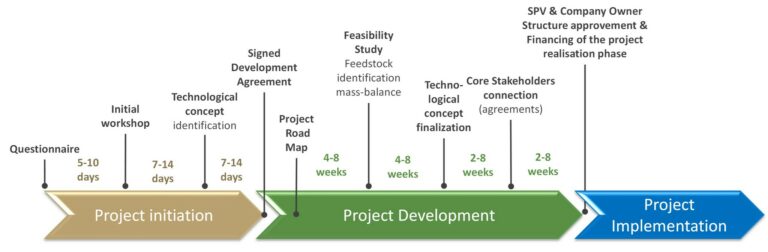
We develop large-scale green infrastructure projects together with technology leaders, local organisations, and financial partners worldwide. Every project follows the 2|5 Principle: a 2-year construction timeline and break-even within 5 years of commissioning.
01
Initial questionnaire & stakeholder scoping
02
Discovery workshop with local partners
03
Feasibility study
04
MOU agreements with municipality, off-takers, and resource providers
05
Consortium building & Special Purpose Vehicle (SPV) structuring
06
Basic engineering (BE)
07
Environmental impact assessment (EIA)
08
Company formation & capitalization
09
Land acquisition & site preparation
10
Construction, assembly, civil works & commissioning
Our project development partner: GreenSinnergy
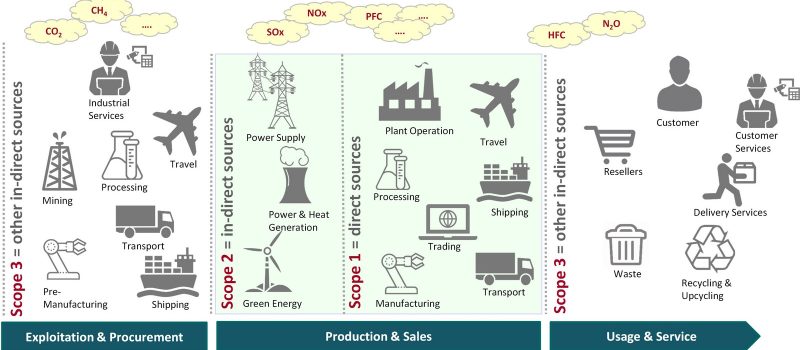
Our GreenIMLead® platform provides real-time CO₂ tracking across your entire value chain — from production to procurement. We identify savings potentials, recommend concrete measures, and connect you to voluntary carbon offsetting certificates.
Scope 1
Direct emissions from owned or controlled sources — production, facilities, company vehicles.
Scope 2
Indirect emissions from purchased energy — electricity, heat, and cooling.
Scope 3
Supply chain emissions — raw materials, logistics, product use, and customer service.
Fully implemented as of January 2026, it affects carbon-intensive imports — steel, cement, aluminium, chemicals, and electricity. EU importers and non-EU producers face an estimated €75 per tonne of CO₂. Companies must prepare today to stay competitive.
Request an OfferQuantify how the carbon border tax will impact your company across the value chain in regard to revenue, cost, and assets.
Examine the carbon footprint by product line to evaluate the relative exposure for your business, industry, and competitors.
Determine a set of actions that your company can take to mitigate risks, lower costs, and gain advantage in the new competitive environment.
Establish priorities and “no regret” moves to strengthen carbon compliance, such as preparing for new reporting requirements.
Create a playbook of scenarios and align the leadership team on which actions to take under which conditions.
While time allows, assemble evidence to inform the forthcoming legislative debate.
How can medium-sized and large companies comprehensively reflect on their sustainability — and better position themselves in the market? Our scientific comparative ESG screening, GreenMLA®, evaluates the sustainability of your products, services, processes, and organisation in an anonymous comparison — and identifies concrete recommendations for action.
The GreenMLA® Methodology
ESG criteria show how sustainable a company is. The GreenMLA® methodology links the three ESG criteria with the seven areas of the IMLead® Heptathlon concept for Integrated Management & Leadership — reflecting individual ESG performance across 21 management areas in total.
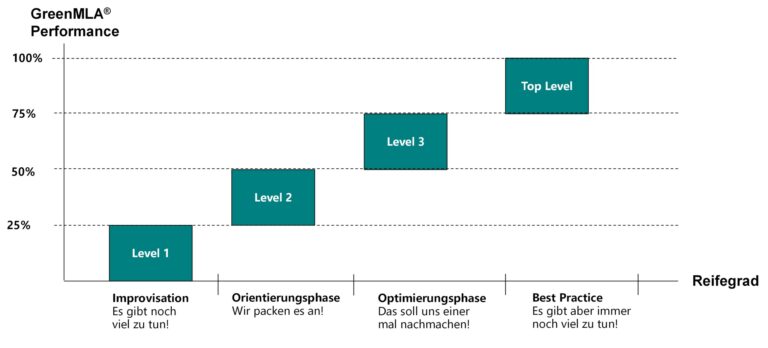
GreenMLA® Maturity Model
Corporate Ranking
The Green Management & Leadership Assessment supports companies in positioning themselves in the corporate ranking as a green company. A sustainability performance score is calculated for each company, showing how well it performs in comparison to all participating companies.
Customers
Purchasing Decisions
Customers increasingly factor ESG into supplier choices. Companies can promote themselves with the GreenMLA® signet and an award as a top-3 company or winner in the annual benchmarking competition.
Investors
Capital Allocation
ESG criteria are increasingly important decision-making factors for investors evaluating sustainability-related opportunities and risks. The individualized benchmarking report is scientifically based and serves as proof of corporate sustainability.
Leadership
Future-Oriented Companies
Future-oriented companies are sustainable companies. The individualized benchmarking report provides participating companies with concrete recommendations for action to position themselves as sustainable, forward-thinking organisations.
Earn the GreenMLA® Signet — recognised proof of sustainability for customers, investors, and partners → greenmla.de
To decarbonise the energy supply of the future, we work with leading technology companies, infrastructure firms, and governments to develop viable hydrogen investment projects. Demand for hydrogen in Germany alone could increase to 1,000+ terawatt hours by 2050 according to current forecasts.
Hydrogen is the most common element in the universe and extraordinarily versatile as an energy carrier — applicable across transport, industry, aviation, shipping, and chemical manufacturing.
At
the demand for hydrogen in Germany could increase by 2050 according to the current forecast.
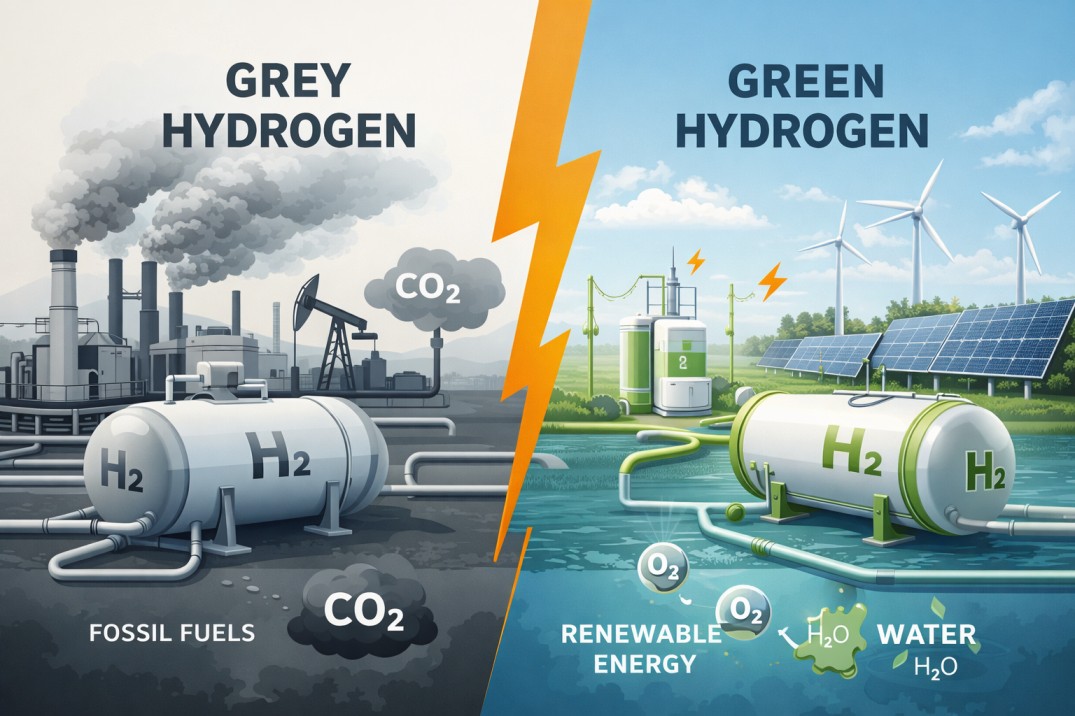
Green vs. Grey Hydrogen
Green hydrogen is produced by splitting water using 100% renewable electricity — zero CO₂. Grey hydrogen, by contrast, uses fossil fuels: producing one tonne of hydrogen emits ~10 tonnes of CO₂ into the atmosphere.
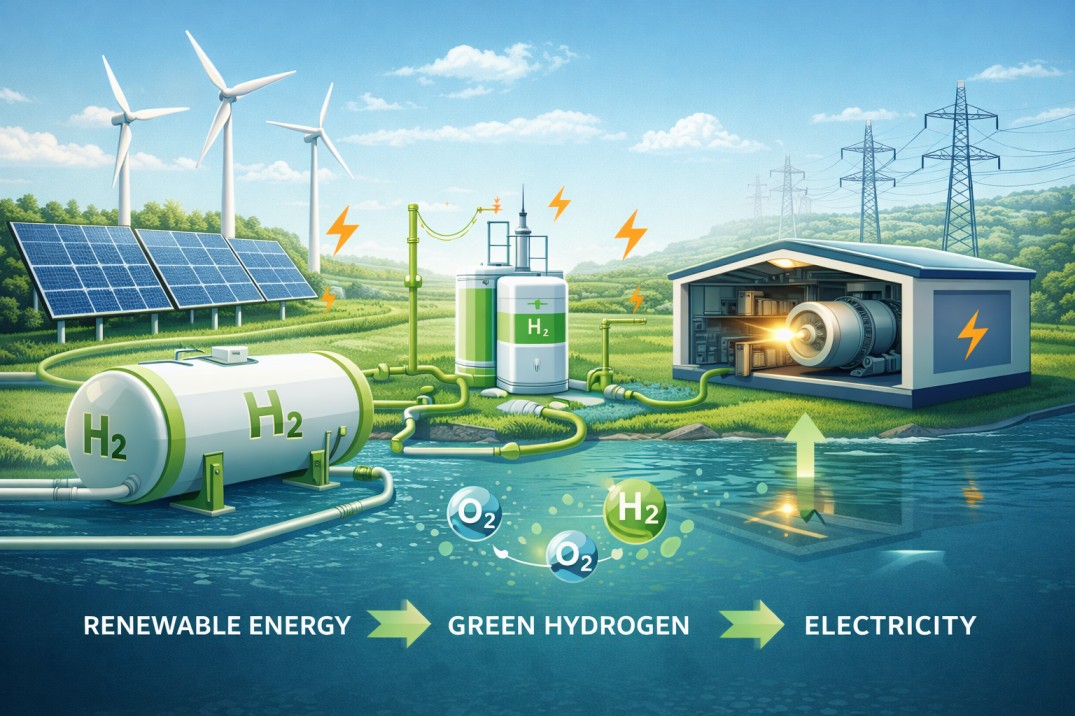
How Electricity is Generated From It
A fuel cell converts H₂ back to electricity through reaction with oxygen — producing only water as a by-product. This energy can power electric motors, feed the grid, or charge batteries.
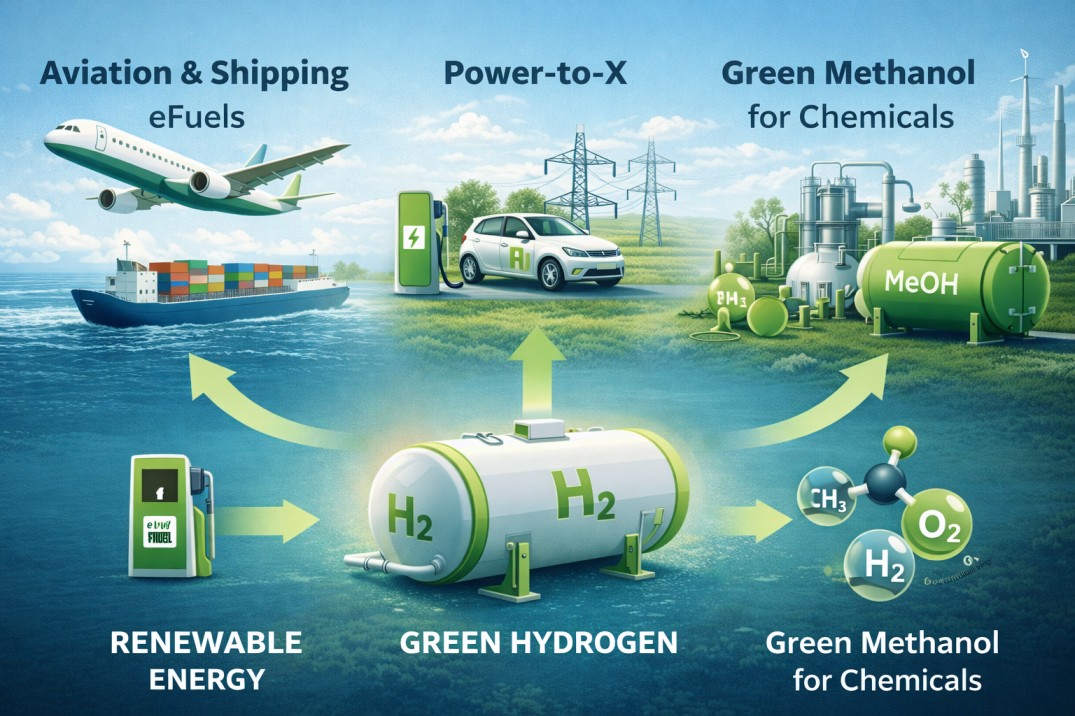
Applications
Medium and heavy land transport · Aviation and shipping via e-fuels · Fertiliser from exhaust gases · Power-to-X processes · Green methanol for the chemical industry.
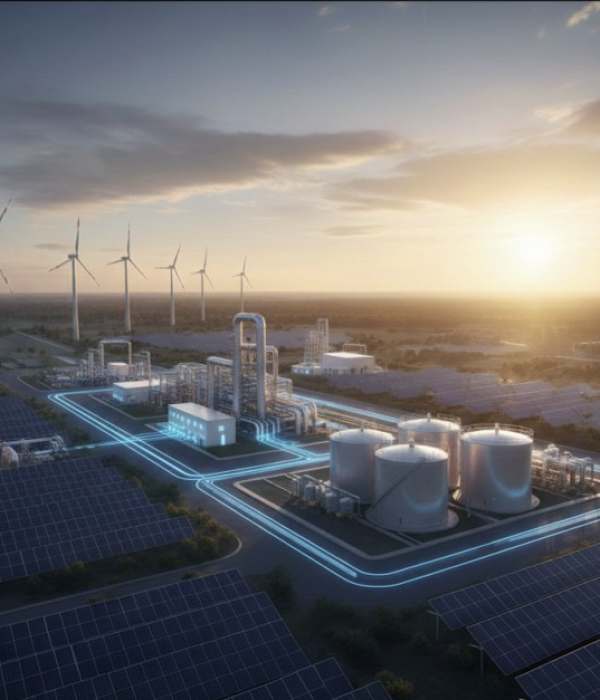
Our Focus: System Integration
Economically viable hydrogen projects require a stable, end-to-end value chain — renewable energy sourcing, water access, electrolysis, downstream products, storage, and transport routes must all be secured before a single investment is made.
This is precisely what we deliver. Together with German technology partners, worldwide regional partner companies, and scientific institutions, we design and implement the full value chain — ensuring every link is in place from source to end-use. Our primary focus is on developing regional solutions in emerging countries, where the need and opportunity for green hydrogen is greatest.
To put this into practice, we have established Centers of Excellence for green hydrogen in Johannesburg, South Africa and Hyderabad, India — where we build electrolysers and develop new hydrogen engine applications together with local and international partners.
Through integrated management and the intelligent combination of technologies, waste can be sorted with high efficiency — enabling up to 99% recycling of mixed waste streams, including liquid and solid fractions, and municipal, industrial, and agricultural waste. We work together with technology leaders to design individual solutions for our clients, relying only on proven and stable processes.
Efficient sorting of liquid and solid waste fractions across all source types
Biogas bioreactor integration: the methane gas mixture produced contains up to 50% CO₂, which is filtered out and used to produce green methanol
Integrated green hydrogen production within the same waste processing cycle
Proven, stable technologies — no experimental risk for the client
Custom solutions designed in direct collaboration with each client’s operational context
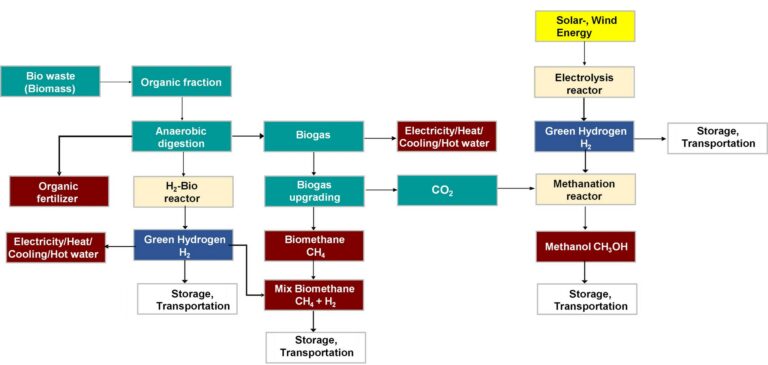
Integrated concept for the production of green hydrogen and green methanol
© Copyright Bertram Lohmueller 2026
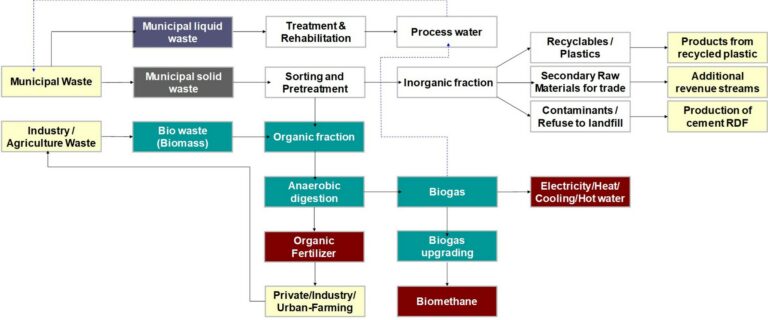
Integrated management of circular environmental technologies
© Copyright Bertram Lohmueller 2026
This integrated approach links different material flows and energy forms — including the production of green hydrogen and green methanol from bioreactor CO₂ — into a single, coherent circular system.
Comprehensive knowledge of your market — especially of competitors active in the same segment with the same products — is a crucial success factor. The results of a benchmarking or feasibility study enable you to develop sharp, evidence-based strategies. In recent years, the Export-Akademie has successfully delivered such studies for DAX companies across international markets.
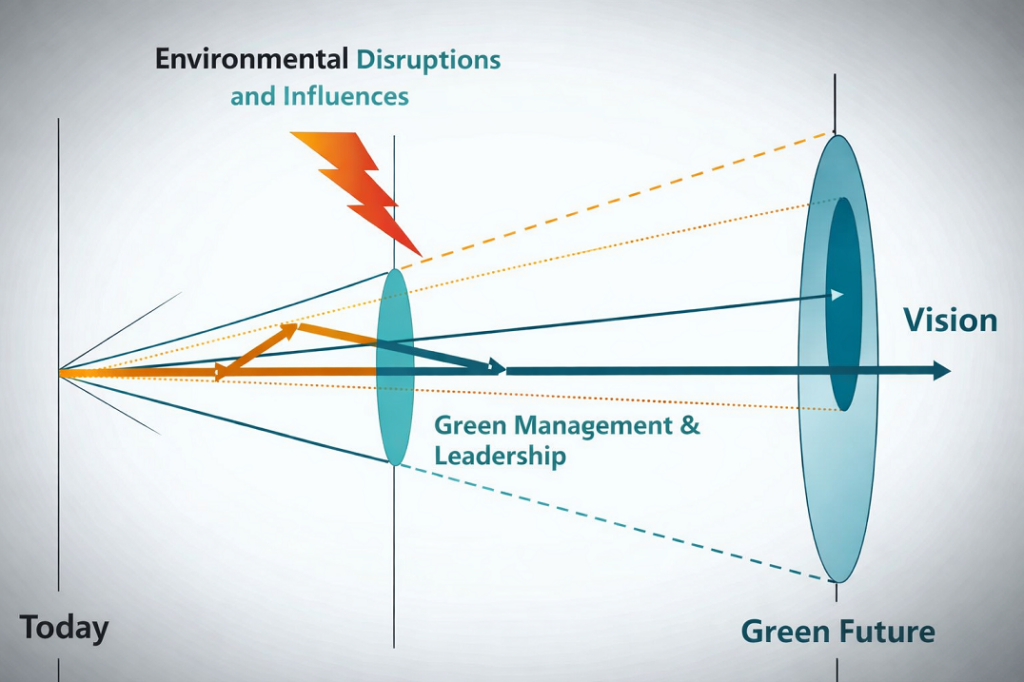
Green Future Management
We help you capture the trends shaping your industry — technology shifts, market dynamics, changing customer expectations — and validate the technical-economic feasibility of your strategic direction before you commit.
What We Deliver
Customised benchmarking and/or feasibility studies
International best practice identification
Performance matrix by technology, business process, or market
Best practice examples and case presentations
Concrete recommendations for action
Final presentation to leadership
Our Process
Task clarification & scope definition
Literature research — studies and databases
Expert interviews — in-company and at institutes, associations
Analysis with a specially developed procedure
Elaboration of recommendations for action
Report documentation and write-up
Final presentation to leadership